April 14, 2010
Saturday night, in the bottom of the 14th inning with the Padres up one run on the Rockies, manager Bud Black had a decision to make. There were two outs and the tying run was on second. Ian Stewart was at the plate and Chris Iannetta was on deck. Black decided to walk Stewart, putting the winning run on base, and pitch to Iannetta (even though Iannetta had already gone deep in that game), who struck out to end the game. He looked like a genius at the time, but things could’ve been much different had Iannetta ripped a two-RBI double down the right field line to win it.
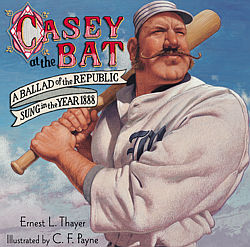
This reminded me of Ernest Thayer’s famous 1888 poem, “Casey At the Bat”. For those who don’t know it, it can be found here. The story details a team down by two runs with two outs in the bottom of the ninth inning. Two weak hitters proceed to hit a single, then a double, which brings up the star hitter, “Casey,” with the tying run in scoring position and two out.
We all know how the story ends. But what might a major league manager have done in this situation? If he’s 2009 Manager of the Year Jim Tracy, he might have walked Casey. And this seems to make sense. First base was open and Casey represents the most feared hitter on the team, if not in the game. In addition, Casey was likely a big, strong home run hitter built like Jason Giambi—it’s unlikely that he had even average speed, and so he may not even have been able to score on a double from the next hitter. What’s not to like?
The first thing not to like is that an intentional walk increases the expected number of runs scored in any inning (Source: Baseball Prospectus at http://www.baseballprospectus.com/statistics/sortable/index.php?cid=68778), regardless of how many are on base and how many are out. Of course, this doesn’t mean it’s never a good idea—sometimes the hitter at the plate is significantly better than the one on deck, and sometimes the extra 1/3 of a run (or so) that the walk creates would be nearly meaningless to the outcome of the game. In the top of the ninth, with the pitching team down a single run and with runners on second and third with two outs, an intentional walk does not hurt the pitching team in any significant way, because if that run were to eventually score, it would mean the difference between having to score three and four runs in the ninth inning—a scenario so unlikely anyway that only a small difference in ability between the on-deck hitter and the hitter at the plate would prompt an IBB.
Steven Biel did an analysis here: http://bleacherreport.com/articles/320766-rating-the-managers-by-intentional-walks of intentional walks issued in 2009, and he ranked the managers by how often they issued intentional walks that had no statistical chance of improving the pitching team’s chance of winning. For this analysis, I care less about the manager and more about the aggregate picture of the walks issued. In 2009, there were 1179 intentional—roughly one every two games. Biel’s very conservative analysis (done with the help of Baseball Prospectus’s run prediction indexes) showed that 246 of these provided no help to the pitching team. This is an amount in excess of 20%. More than one in five times where the manager decides to go to the well with the intentional walk, it is a mistake. Further, with 246 “bad” IBBs in 2,431 games in 2009, this means that once in every ten games (well over once per day) a manager is making a mistake and putting his team at a disadvantage by allowing another runner to reach base.
So to answer my own question earlier, issuing an intentional pass to Casey might have worked out all right. But considering that Casey was probably batting in the #3 spot, walking him would have put the winning run on base with the cleanup hitter at the plate—likely providing a much better opportunity for joy in Mudville than the opposing team did by taking their chances with Casey. However, Biel’s analysis suggests that many of the 30 major league managers would have chosen to walk Casey, as Bud Black did most recently on Saturday, April 10. Taking into account the number of intelligent people in the United States who would leave well-paying jobs today for a chance to make $10 an hour as a major league manager, it does seem strange that managers so often make the move to put a runner on base when it makes no statistical sense to do so.
 September 15, 2010
|
Posted by Justin Abramson
September 15, 2010
|
Posted by Justin Abramson
 On Labor Day weekend, my dad and I woke up at 5AM and flew all the way to the other side of the country. We battled hellacious Los Angeles traffic with tiny maps and bad directions. We spent $34 on parking—for the first night. And we drove six hours across the desert, dozens of miles from civilization but just one engine breakdown away from a grim fate at the hands of the 105-degree Arizona heat.










Recent Comments