Area Code Games | The Golden Sombrero Baseball Blog | MLB, Fantasy, College & High School Baseball News

Changeups and Screwballs: A Southpaw’s Perspective 8/25/11

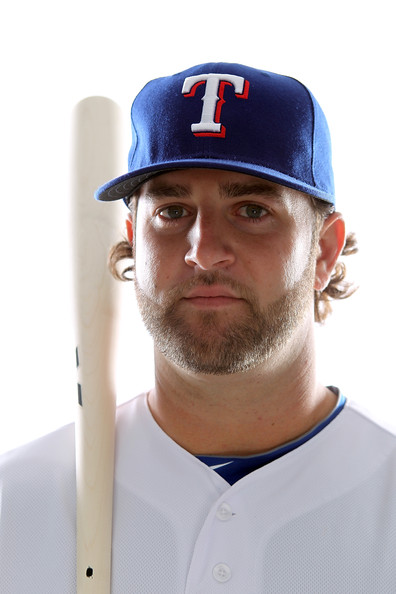
–       I guess it is a good thing that Rangers catcher, Mike Napoli, doesn’t play wide receiver.  Big Papi didn’t even look like he was planning on barreling over Napoli, yet the catcher still heard footsteps and lost the handle on what should have been an easy out at the plate.  And he’s a catcher?

–       As you may have heard, thanks to Buster Olney, the Astros pulled Wandy Rodriguez back after he was claimed by the Rockies.  Not sure how I feel about this.  While I do think that Wandy is undervalued as a pitcher, it is embarrassing to watch Houston trot him out there as an ace.

–       Man I hate how much coverage the NFL gets during the month of August.  I know that it’s the most popular sport in America and all, but this is the most significant time of year for MLB.  Who the hell cares about pre-season football?  The players themselves don’t even care about pre-season games that much.

–       After hearing how Jered Weaver told his agent, Scott Boras, that he was going to take less money to stay in LA, I almost shed a tear.  Then he had these quotes about the whole ordeal.  The Angels are extremely lucky to have a guy like this leading their staff and team.  I pray that youngsters realize this is how to go about baseball.

–       After reading Dee’s article on the Connie Mack World Series vs. Area Code Games, I felt compelled to shout it out.  If you haven’t peeped it yet, do so.

–       Why is it that in the world of baseball, people are so slow to accept change?  Older generations hold on to outdated theories and philosophies with such a stranglehold that it makes me laugh.  This not only refers to SABR oriented views, but also on mechanical philosophies, coaching styles, and everything in between.  Maybe it is because I am of a new, younger generation.  Maybe it is because old people detest and refuse change.  Maybe it is because the older one gets, the more out of touch they become with the youth.  Whatever the reason, it is so bothersome to see older coaches worrying about doing things their way, as opposed to do what is in the best interest of the kids.

Club Baseball’s Flaws

Recently I wrote an article expressing my preference for club events as opposed to showcase-style events.  My comparisons centered on the Connie Mack World Series and Area Code Games, which take place simultaneously most summers and immediately precede Aflac weekend, which is now a Perfect Game event.  My preference for club ball stemmed from my belief that real games with substance and meaning beyond simply recruitment, scholarship dollars, and the draft is not only better for fans and players, but also actually leads to more effective and accurate player evaluation.  I personally find this to be beyond debate.  However, club baseball is certainly not devoid of flaws, and in some ways may be reflective of an accelerating problem within amateur baseball.

Like many large baseball events, the CMWS houses its visiting players with host families.  This both provides players a convenient way of getting from place to place and being attended to so that their focus can be on the game during their stay as well as a way of saving money.  Nearly all baseball families with the means to host players join in actively in the process especially those households with young children.  As a child my family housed players for the CMWS.  We typically housed players from the West region since during my childhood New Mexico was a member of that region of AABC.

Since then New Mexico has been moved to the South Plains region.  My recollection of what the teams from the West region represented displays club baseball in the 90’s as essentially a collection of players of similar skill level who primarily played events within a 500-mile radius of where the squads were based.  This in no way limited what the talent levels of the teams constituted, but simply reflected the quality of play within their region.  Understandably our hosting of the West players typically meant that we hosted players from southern California, the finest recruiting area in the U.S.A. for the last 50 years.  Nevertheless, these players, when asked by a pre-pubescent version of me how they got so good, simply replied nearly unanimously, “We play great players every single night.”  They didn’t participate in big tournament prior to the West regional or have 40 uniform combinations.  They went to the yard and played.  That’s it.  It was that simple to them.  When asked where they did this, they told me, “In our summer Connie Mack league.”  I was stunned.

In Farmington there are at most four competitive U18 teams annually – typically two.  Over half of the teams in the local Connie Mack league are capable of providing no real challenge to anyone who even came close to starting for a high school varsity.  However, the structure of the league every season is one in which each team must play each other team at least once.  It is possible that, given the schedule and the unfortunate and incorrect illusion that playing at Ricketts during the months of June and July is somehow of more value than simply playing comparably talented and skilled players as many times and at as many venues as possible, the best two teams in the league will not play each other a single time.  What’s more is that the top U16 teams are often not permitted to play any of the top U18 squads.  It is possible that a team like the Strike Zone Cardinals or Naataanii, good club teams with quality showings at various nationally renown tournaments, might go the entire month of June without playing even a single meaningful game in Farmington.  So obviously it is difficult to comprehend playing great players night in and night out, as is the case in leagues like the Lone Star league in Dallas, the East Cobb league in Atlanta, and the South Coast league in southern California.  Farmington baseball is not unique in this regard, but it may be the least capable of solving the problem due to the requirements in place that must be fulfilled to earn the hosting rights of the CMWS.

To somehow ensure that the premier talent in town is challenged as often as possible, teams play in numerous tournaments nationwide throughout the fall and summer from around the ages of 12 through age 18.  Obviously these events require money for travel, hotels, tournament entry fees, and food, and obviously not all of the players who ability-wise should be on the top team are rostered by these squads.  This has far-reaching implications for players of pre-high school age since it stunts their development relative to their peers.  Because the level of play in local leagues has become so stratified, a product of the players with the means to travel doing so in effort to find competitive games, many youth nationwide have found little joy in the game since they get manhandled nightly by those teams who travel.  These players who either lack the means to travel or are simply not among the best in town as young children are weeded out early, and the quality of the local leagues is perpetually downgraded as a result.

The threat to the game as a whole is found in the fact that the earlier and earlier that players are weeded out, the smaller and smaller the pool of players becomes such that many potentially talented players are removed prior to adolescence.  Who among us is the same guy now that we were when we were 10?  It should be blatantly obvious that this poses massive potential problems and is far from exclusive to Farmington, although in all cases the effect is felt more the smaller the population.  The danger of high profile club baseball events is that it belongs only to the players, teams, families, and programs that can afford it.  This group is certainly not inclusive of all players whose ability justifies inclusion in this group.  The beauty of Area Code is that it belongs to everyone who has shown a scout that they deserve to be there theoretically based solely on ability.  But what happens if a player was weeded out before he could show a scout that he deserves the exposure because he couldn’t pay to play as a pre-pubescent child?

Providing players with club opportunities and access to events like the CMWS and World Wood Bats is a service to the players and to the game as a whole, but efforts must be made to ensure that players who lack the funds to take part in travel baseball prior to school ball age is reached are not lost to the game before sponsors can take over, which usually happens at the ages of 16-18.

The Connie Mack World Series vs. Area Code Games

On Twitter this morning, Oakland pitcher and former CMWS (2005 and 2006) and Area Code Games (2004) participant, Brett Anderson, asked ESPN’s Keith Law if he’d ever been to Farmington in August for the Connie Mack World Series.  Law said that he had not due to the simultaneous annual scheduling of the CMWS and Area Code Games.  This is an issue for top underclassmen each summer whose club organizations happen to still be alive after Connie Mack state and regional play concludes.  Fortunately for both events only 10 teams can make it to Farmington each year, and only two are there the entire week, so often players find little conflict in terms of attending both events if only for a portion of each.  For instance, in 2009 Farmington’s own Jake McCasland was the scheduled starter in the opening round of the CMWS as well as a participant in the tourney’s homerun derby.  He obviously was obligated and thrilled to participate in the CMWS as long as his club had not been eliminated.

Once, however, they were knocked out, Jake boarded a plane to California to pitch at Area Code.  This is common for players with invitations to Area Code who do not wish to abandon their club and/or miss the annual CMWS festivities.  Additionally, players who elect to play for organizations like the Midland Redskins, South Troy Dodgers, Florida Legends, East Cobb Yankees, Arizona Firebirds, or Strike Zone Cardinals do so understanding that the clubs’ expectations are to play into the middle of August ever single season.  While these clubs are without question among the finest in the country, playing for them can mean less time to spend on the ever-developing national showcase circuit.

Showcases are designed to present recruitable players to recruiters, be it professional scouts or collegiate coaches.  A great deal of what amateur club coaches and financiers as well as prep coaches are trying to accomplish is “helping kids reach the next level.”  It is next to impossible to walk into any indoor facility or read any amateur club’s website “about us” page without hearing something about the “next level” and how their club is second to none with regards to helping kids reach whatever that is.  And those are the good guys.  The bad guys are the people suggesting to kids that playing club baseball is no longer necessary or beneficial.

That is how we arrived at the national showcase circuit, a circuit that Bryce Harper made famous during his amateur ascension.  Players in this circuit have allegiance to no one and have practically no concept of what “team” constitutes.  They immediately hit the road following the end of the school season in pursuit of BP rounds and 60-yard dashes.  The showcase circuit is a joke to fans of baseball because it effectively strips the game of any intrinsic meaning or value in favor of dollars and exposure.

The CMWS is somewhat of a throwback relative to the national showcase circuit in that it actually fields teams of players who have spent a minimum of a couple of months together, and in some cases years to a decade together.  This in many ways is analogous to school ball except for that the talent level tends to be considerably higher.  The thought of a school team succeeding in an event like the CMWS is laughable, but the idea that “team” matters is certainly a reflection of the school baseball concept.  This isn’t to discredit players who outside of school baseball have no means of exposure during the non-spring months other than showcases.  This is common in rural areas, inner cities, and areas like Wyoming and Iowa where club baseball options are limited or nonexistent because the school season takes place during the summer months.  Brandon Nimmo is a product of that sort of environment, and he landed in the first round and now has a chance to really learn what team baseball means within the professional ranks.

The Area Code Games have much more in common with a basic showcase than they do with something like the CMWS.  Teams are assembled in glorified random fashion based loosely on geography.  Yes, the talent level is through the roof.  A great deal of the top NCAA recruits as well as the early portion of any draft will have experience in Area Code, but the same can be said for many events including the CMWS.  The PG All-American game (formerly Aflac) is held the Sunday after Area Codes and the CMWS and has many players from both rostered.  It’s always sort of an end-of-the-summer shindig bringing together the best players from the CMWS and Area Codes into one facility for a handful of high profile innings.  Aside from a select few Midland and 18U Team USA rosters, the PG/Aflac rosters are the best assembled annually.  This year is no different, but once again, there is zero team concept involved and the sample size tends to be so small and meaningless that talent evaluators have less to go by than what they would find at an event like the CMWS where players actually give a shit what the score is.

The difference between events like Area Code and the CMWS as well as the PG/Aflac All-American Game is that the fans in the CMWS root for the players, but they also root for the teams.  At events like Area Codes and other showcase-style recruiting events, the name on the front of any player’s jersey is of little concern to anyone either on the field or in the stands, and the score on the scoreboard is worth far less than each player’s box score line.  Perhaps the perfect example is Strike Zone Cardinal Damion Lovato’s final at-bat in the CMWS, which took place in the 8th inning Monday night against the South Troy Dodgers.   Damion hit a triple after breaking his hamate bone on a foul ball earlier in the game.  Something tells me that any player at Area Codes would have probably sat the at-bat out, but the Cards needed him to contribute, and so he gave his team the best he had.  I, as a baseball fan, greatly prefer the Connie Mack World Series and selfless performances like Lovato’s to any showcase-style event like the Area Code Games.