Players | The Golden Sombrero Baseball Blog | MLB, Fantasy, College & High School Baseball News

Posts belonging to Category Players


Daniel “Dee” Clark’s 2010 Predictions

April 3, 2010

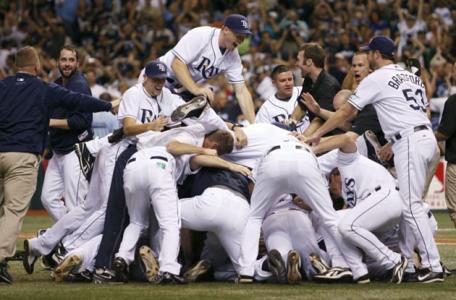
rays

NL West: Dodgers, Giants, Rockies, Diamondbacks, Padres
NL Central: Cardinals, Cubs, Brewers, Reds, Astros, Pirates
NL East: Phillies, Marlins, Braves, Mets, Nationals
NL Wild Card: Marlins
NL Pennant: Phillies over Dodgers
NLCS MVP: Chase Utley

AL West: Rangers, Mariners, Angels, Athletics
AL Central: Twins, Tigers, White Sox, Indians, Royals
AL East: Yankees, Rays, Red Sox, Orioles, Blue Jays
AL Wild Card: Rays
AL Pennant: Rays over Yankees
ALCS MVP: James Shields

World Series: Rays in 7…on the road.  Carl Crawford is the MVP.

AL ROY: Wade Davis
AL Cy Young: Felix Hernandez
AL MVP: Alex Rodriguez

NL ROY: Jason Heyward
NL Cy Young: Roy Halladay
NL MVP: Albert Pujols

Patience is for Suckers: The Case for Swinging First-ball, Fastball

April 1, 2010

Many coaches teach that the best way to approach hitting is to work the count against a pitcher.  After all, the more pitches a pitcher must throw, the better chance a hitter has to time his delivery, get a sense for his stronger and weaker pitches and learn what he might throw in certain situations.  This not only helps the hitter, these coaches argue, but also the team.  If a pitcher consistently has to throw four or more pitches to every hitter, he will be out of the game relatively quickly, even if he is pitching effectively.

As a hitter, I always looked at it differently.  I felt that the first pitch I saw during an at-bat was often the best one.  I also believed that as I got deep into the count, the pitcher would be able to dictate the at-bat more and force me to swing at pitchers’ pitches.  Further, true in all levels of baseball but especially in high school, pitchers are taught above all to get ahead of the hitter. This usually means that on the first pitch, pitchers will try to throw a strike, typically a fastball.  Very rarely will a pitcher start off by trying to get a hitter to chase an offspeed pitch out of the zone.  This only begins to happen when pitchers are already ahead of hitters—perhaps after the hitter has taken a quick strike or two.

Looking at the numbers, here are the batting averages by count in MLB:
0-0 = .344
1-0 = .341
2-0 = .351
3-0 = .394
0-1 = .324
1-1 = .327
2-1 = .338
3-1 = .368
0-2 = .166
1-2 = .178
2-2 = .195
3-2 = .233
Source: Baseball FactoryBlog: A Premier Scouting Partner for Baseball America http://baseballfactory.com/blog/labels/batting%20average.html

Looking at these numbers, one thing becomes clear—the only hitter’s counts better by a statistically significant amount than the first pitch are 3-0 and 3-1.  This makes sense—in these situations, pitchers are often forced to throw a fastball strike or risk a walk—a “free pass”.  Conversely, once a hitter gets two strikes on him, his batting average drops like a rock.  This also makes sense, because when a pitcher has worked an 0-2 or 1-2 count, he can afford to throw an offspeed pitch outside the strike zone in hopes that the hitter will chase.  The hitter also has to protect the plate, meaning that if the pitch is close, he has to swing.

Further, home runs occur most often in MLB on the first pitch—more often than in any other count.  0-0 counts also see the most doubles, triples and RBI.  While of course some of this can be explained by the fact that every hitter sees a 0-0 count in every at-bat, it also leads me to believe that hitters, when coming up to the plate looking to be aggressive, can jump on that first pitch well if the pitcher is just trying to get ahead in the count.

Finally, we can take a look at the OBP numbers for after the appropriate count.  This is calculated slightly differently because obviously, no one (not even Barry Bonds in 2001) can walk on anything other than a three-ball count, so the OBP for 1-0 represents the OBP for all hitters who begin their at-bat with ball one, regardless of how many more pitches they see:
1-0 .394
2-0 .516
3-0 .760
0-1 .281
1-1 .321
2-1 .404
3-1 .595
0-2 .211
1-2 .242
2-2 .306
3-2 .263
Here, we see a much sharper rise from 1-0 to 3-0.  However, more interesting is that we see a fall in OBP from 2-2 to 3-2.  We do see OBPs rise for non-two-strike counts.  Contrary to batting average, OBP is actually better on 2-1 than on 1-0.  Still, the biggest thing to notice is that the two-strike OBPs represent three of the lowest four on the chart.  Sure, great hitters like Luke Appling may have been able to foul pitches away (once even 24 in an at-bat!) until they found one they liked, but in reality, the advantage is to the pitcher in these situations.

In conclusion, I would draw the conclusion that if you have runners on in front of you and are trying to get a base hit to drive them in, taking pitches and getting deep in the count would be a horrible idea.  If you are trying to start an inning off, it’s still not a good idea to get too deep in the count because two-strike counts lead to the poorest OBPs, but taking pitches makes more sense in this situation.

I certainly don’t expect everyone to agree, not only because this is anathema to conventional wisdom on the game today, but because my baseball career was the shortest of all of this blog’s contributors.  But in one hitter’s opinion, the best way to hit with a two-strike count is to not get in one.

Finding Value in Relief Pitchers

March 29 , 2010

mrhappy

Regardless of which fantasy references you frequent, I’m sure that you have been beaten upside the head with theories as to how to draft relief pitching.  I have both read and experimented with advice that has ranged from the conservative, waiting until the 3rd round to draft the best available closer, to the experimental, “I won’t pay for relief pitching/saves.”  While I must admit that I don’t subscribe to either of these strategies in full, I have found the latter to be the most efficient, exciting and rewarding.  Daniel “Dee” Clark, a fellow blogger on the site, is about as strong of an advocate of this philosophy as any fantasy enthusiast I have read.  For three consecutive years he has excelled in our league due to his knowledge of the game, it’s players and their statistical relevance.  Each year he has compiled a lethal offense under the belief that there will always be an array of relief pitchers that, at the end of the year, will have been more valuable than the game’s top closers; in layman’s terms, relief pitching is far too unpredictable.  Every season, Major League Baseball is riddled with controversy surrounding the security of closers(see Brad Lidge circa 2008 & 2009).  The excessive scrutiny on “closers” really only yields one positive result, the emergence of fresh, young arms that have been anxiously awaiting their opportunity to shove it down hitters’ throats(see Andrew Bailey, Leo Nunez circa 2009).  With the 2010 season a mere week away, it’s important to note several talented, young guns who appear to be in line to produce huge years for their organizations and fantasy owners alike.

Mike Adams, Padres –
2009 Statistics: 37 IP, 0-0, .73 ERA, .59 WHIP, 5.63 K/B
Why haven’t you heard about Mike Adams? Well, it’s most likely because he has literally been under the knife since 2006.  However, he reappeared towards the end of last year and was nothing short of nasty.  Barring another injury, he should accumulate a respectable amount of wins as it seems he will be trusted to keep games close before giving way to Heath Bell.  Should Bell(or Pocket Broxton as I like to call him) get traded this season, I would expect Adams to get the promotion over teammate Luke Gregerson.

Neftali Feliz, Rangers –
2009 Statistics:  31 IP, 1-0, 1.74 ERA, .68 WHIP, 4.88 K/BB
I don’t want to spoil it for you, but if you haven’t seen Mr. Happy pitch yet, you must, because he is dominant.  Whether the Rangers eventually use him as a starter or reliever, he will put up similar numbers to last year.  A coveted prospect of the organization, he responded nicely to being thrust into pressure situations at only 21 years of age.  If Frank Francisco either gets hurt or charged with another felony assault, look for Feliz to step in as closer.

Matt Thornton, White Sox –
2009 Statistics: 72.1 IP, 6-3, 4 SV, 2.74 ERA, 1.08 WHIP, 4.35 K/BB
Matt Thornton throws the most effortless 96-98MPH fastball I have ever seen.  The 6’5″ left hander has been one of the best set-up men in baseball over the past two seasons as indicated by his .198 BAVG in 2008 and .217 BAVG in 2009.  While it is important to note that he hasn’t exactly excelled in the closer role when given the opportunity(1 SV/6 SVO in 2008 and 4 SV/9 SVO in 2009), it definitely does not mean that he won’t be the front runner if Bobby Jenks gets hurt.

Daniel Bard, Red Sox –
2009 Statistics: 49.1 IP, 1-1, 1 SV, 3.65 ERA, 1.28 WHIP, 2.86 K/BB
If anything were to happen to Jonathon Papelbon, I don’t think the Red Sox would miss a beat.  Young, flame thrower Daniel Bard is their closer of the future.  With a high 90’s heater and a devastating slide piece, Bard has as bright of a future as any young pitcher in baseball.  Any control problems that worried fantasy owners last season are sure to wane with more experience and confidence.

Sergio Romo, Giants –
2009 Statistics: 34 IP, 6-3, 5 SV, 3.17 ERA, 1.07 WHIP, 3.73 K/BB
With so much focus on the Giants starting rotation, the excellent arms in their bullpen seem to be perennially overlooked.  After the All-Star break in 2009, Romo showed that he is the real deal and a fixture in the Giants bullpen.  He accumulated 6 wins and 5 saves in only 34 IP last season, which seems weak compared to his sheer dominance across the minor leagues.  Complimented by left hander Jeremy Affeldt, the Giants should have a great bridge to closer Brian Wilson this season.

Brandon League, Mariners –
2009 Statistics: 74.2 IP, 3-6, 4.58 ERA, 1.25 WHIP, 3.62 K/BB
You might as well just ignore his stats from last year because League is not the same pitcher.  With a new pitch added to his already potent arsenal, this is going to be League’s breakout season.  Although I repeatedly predicted his breakout seasons to happen while on the Blue Jays, it’s never too late for a guy with such great stuff(see Mike Adams above).  26 year olds League and teammate Mark Lowe are sure to be a deadly duo within the Mariner’s bullpen and worthy of consideration in deep fantasy leagues.  If incumbent closer David Aardsma were to hit the DL or revert to his wild tendencies, League should have no problem filling in.

Joba Chamberlain, Yankees –
2009 Statistics: DOES NOT MATTER
We have all seen what this guy can do as a reliever.  He is as dynamic and dominant as any closer in baseball and should get a chance if Mo’s fountain of youth runs dry.  While, I’m sure that a Mo injury would only ignite another season long debate on Joba’s importance as a starter or reliever, the guy will do whatever is asked of him day in, day out.  Look for Joba to have a monster season out of the Yankee bullpen.

Joey Devine, Athletics –
2009 Statistics: DNP(Tommy John surgery)
Before the emergence of Andrew Bailey, Devine was the closer on paper headed into the 2009 season.  However, his ongoing elbow troubles forced him to have Tommy John surgery and surrender his whole season.  One year later, Devine is said to be healthy and ready for the season where he will be setting up games for AL Rookie of the Year Andrew Bailey.  Devine’s closer like repertoire makes him the leading candidate to close for the A’s should anything happen Andrew Bailey.  Although, from what I have seen, Bailey looks like a pretty durable young hoss

The Yankees Ever-Improving Pitching Staff

March 29 , 2010

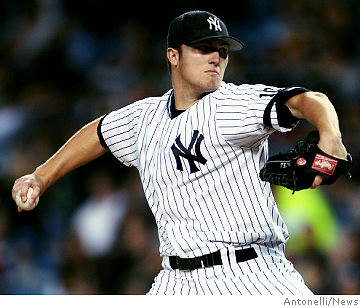
hughes

It was announced a couple of days ago that Phil Hughes had won the battle with Joba Chamberlain for the fifth rotation spot in the Bronx.  It would have been tough to imagine this competition four years ago when Phil Hughes and Matt Garza were fighting for Minor League Pitcher of the Year awards and Joba was a fresh face in professional baseball after a good – not great – collegiate career at Nebraska.  Nevertheless, Joba quickly ascended through the Yanks farm system occasionally touching triple digits with his fastball while using multiple 70-grade breaker variations.  While he was a tad high effort, most scouts within the organization seemed to think he could retain those numbers through 100 pitches.  Unless Joba was hiding an injury last summer, I think it’s time those thoughts were laid to rest.  His fastball very rarely reached the mid-90’s on any consistent level and his breaking stuff was flat and easily detectable.  Nothing changed this spring, and now he finds himself back in the bullpen looking at 60 innings this season.  Hughes was absolutely electric during the second half of 2009 and was impressive enough this spring to secure a place in one of the top 3 rotations in baseball.  I expect New York to be fairly conservative with his usage this season, especially through the break, primarily because Hughes has never even approached 200 IP’s in a season.  No big deal with the Yanks pen.  With the addition of Chamberlain, the 7th, 8th, and 9th innings should be real yawners for the Yankee defense.  Chamberlain, David Robertson, and Mariano Rivera all have huge strikeout stuff that should lock down many tight W’s for the defending champs.  Honestly, and I hate saying this sort of thing in March – especially given that the Sox and Rays are the 2nd and 3rd best teams in the league – but the Yanks should run away with it all this season in even more casual fashion than in 2009.  They may be old, but they did get younger in the offseason, and I tend to think that exceptional athletes in the Jeter, Rodriguez, and Rivera mold age very gracefully.  Girardi must realize that these players will need days off more frequently than their younger teammates, but he knows that.  I like Brian Cashman, but he is making that division more predictable than any fan outside NYC wants.

The Next Ryan Braun?

March 26 , 2010

After spending a couple of weeks with Stephen Strasburg this spring, Nyjer Morgan decided to nickname him, “Jesus.”  It seems nowadays like every organization, especially those in dire need of a savior, tout their young prospects as though they will one day absolutely be middle-of-the-order smashers with Ozzie’s skills at whatever positions they play or frontline aces in the Roy Halladay mold.  Consider these names: Dominic Brown, Justin Smoak, Buster Posey, Desmond Jennings, Brian Matusz, Yonder Alonso, Dustin Ackley, Aroldis Chapman, Jason Heyward, etc.  Any club in baseball would/should want any and all of these players.  Remember these names, however, Cameron Maybin, Alex Gordon, Brandon Wood, Delmon Young, Fernando Martinez, Homer Bailey, etc?  It’s easy to understand what drives such lofty expectations with young talent.  When was the last time the Yankees put a decent amount of stock into what any rookie might accomplish?  Joba does not count.  Desperate and poorly funded teams tend to spend a lot more time praying than those who can so easily write massive checks.  It’s almost as though the first mention of a talented player’s careful development and steady promotion leads to Ryan Braun-esque expectations.  Ryan Braun is obviously not on the second list nor do I truly think any player in the minors will one day be as good as Braun is now.  Justin Upton may grow into a similar type of player.  Maybe.  Of all the prospects mentioned, there are three who I think will be all-stars within 5 years.  The others are destined for mediocrity for one reason or another.  Strasburg is in a different class altogether.  He will be Josh Beckett.  We won’t consider him.

The three of interest are Buster Posey, Desmond Jennings, and Jason Heyward.  Why these three?  They walk and make contact.  Both Jennings and Heyward walked as many times as they fanned last season, and Posey was not far off.  These players all possess outstanding athleticism, but in baseball all that truly translates to when young is the ability to learn positions quickly in order to get to the big squad sooner.  Exceptional talent means something different in baseball.  This is not the NFL.  Morons who can run fast and jump high do not necessarily translate into all-stars.  Athleticism never hurts, but it only goes so far in understanding what to expect from rookies.  In 2007 the folks at Baseball America, right before Braun exploded onto the National League scene, ranked Cameron Maybin 20 places ahead of Ryan Braun.  How could they have missed by so much?  Simple.  Bad teams and bad scouts place way, way too much stock into athleticism.  Baseball America is certainly quite reputable, but they tend to see the game as it was and not so much as what it is and what it could be.  Would Cameron Maybin have a better NFL career than Ryan Braun? Likely.  So what?  Big fastballs and fast 60’s mean nothing in the minor leagues and the big leagues.  What does?  Baserunners.  Posey, Heyward, and Jennings already know how to do the most important thing in sports.  Getting on base.  Strasburg already knows how to prevent this.  His fastball/slider combo is dazzling, but the single aspect of his collegiate stats that stand out the most is his otherworldly K/BB ratio.  For baseball purposes, it may make more sense to simply consider it infinity and move on.  Sign them all up now.  Or wait if you have no interest in winning (Braves and Rays).  Either way, when these players do begin their big league careers (Posey’s dozen or so AB’s in September excluded) they will continue to do the things they did in the minors.  Play baseball with the realization that first base is the new plate.

I told a friend in lab today that I would talk a little about the Rangers in my next post since I’m living in Dallas now.  As I don’t want to give the impression that I have anything serious against Baseball America, I will make mention of the fact that they have given Texas the top organizational review for the second consecutive season.  They are absolutely right on in doing so.  Texas has talent in every position, and for the most part it tends to be young.  Their farm system is as stocked as any in the game except possibly Tampa.  All this being said, they are essentially a lineup of question marks.  I project it to look something like this whenever Ron Washington gets off the cocaine and moves Nelson Cruz up in the order.

  1. Julio Borbon
  2. Michael Young
  3. Josh Hamilton
  4. Vladimir Guerrero
  5. Ian Kinsler
  6. Nelson Cruz
  7. Chris Davis
  8. Elvis Andrus
  9. Jarrod Saltalamacchia/Taylor Teagarden

It should look like this:

  1. Michael Young
  2. Josh Hamilton
  3. Ian Kinsler
  4. Nelson Cruz
  5. Vladimir Guerrero
  6. Chris Davis
  7. Elvis Andrus
  8. Catcher
  9. Julio Borbon

There is injury risk top to bottom here, and not very many of these guys have truly demonstrated the ability to get on base all that frequently, but they have ungodly thump here and easily the best lineup in the AL West.  The rotation is worse, but why would a team build around arms in Arlington?  Even so, young guys like Neftali Feliz and Derek Holland possess considerable upside, and Martin Perez, likely the best pitching prospect the Rangers have had this decade, is not too far away from arrival.  These guys catch the ball very well, and the addition of Borbon in center will only prevent more runs.  The Mariners made a lot of improvements this winter, and the Angels are still the team to beat, but I personally think the West will be very tight, and I expect these three teams to be very active in the trading market in June and July.  I think the Rangers have a slight edge if everyone is healthy.  Maybe by a game or two.

I just want to give a shout to young Grinnellian rightfielder, Paden Roder.  His slashes right now read .440/.559/.840.  The Ivy League-bound senior has had quite a career for the Pioneers.  Let’s wish Paden and the other Pioneers a strong finish in Florida free of injuries and full of sun and W’s.