Players | The Golden Sombrero Baseball Blog | MLB, Fantasy, College & High School Baseball News

Posts belonging to Category Players


Welcome Back: The Resurgence of Vernon Wells, Kelly Johnson and Andruw Jones

May 3, 2010

kj

There are a handful of players across Major League Baseball that are proving that their misfortunes and struggles from last year(and some even longer) are behind them.  For avid, fantasy enthusiasts like myself and the rest of the staff at The Golden Sombrero, the resurgence of many of these players may not be news.  Yet, to those not in an absurdly competitive, 16-team league, these once elite, ballplayers will continue to be unrecognized or disregarded to their involvement on a potentially non-contending team. Despite this notion, and also considering that most players are nearing 100 at-bats, Vernon Wells, Kelly Johnson and Andruw Jones’ immediate success cannot be ignored.  For these few players, it is important to dissect what has made them successful thus far and whether they might be able to maintain their current level of production.

Vernon Wells, OF Blue Jays
2010 Statistics: .330//385/.690 (1.075 OPS%)  21 R, 12 2B, 8 HR, 18 RBI, 1 SB
Like so many others, I was more than ready to write off Vernon Wells as a lost cause; another player who has been rendered irrelevant due to a weak Blue Jays’ offense and perpetual injuries.  Wells finished his 2009 campaign with a line of .260/.311/.400 that included 15 HR, 66 RBI and 17 SB, which, in reality, is not all that terrible.  However, he had set the bar high for himself with his 2003 season that included 33 HR and 117 RBI.  Is Wells capable of repeating such production? More so, can he surpass his previous career highs?  I believe that he will.  Wells has never struck out more than 90 times in a full season and has a career K/BB ratio of about 2, indicative that he consistently makes contact.  When you combine his knack for contact with the fact that he is generating a fly ball 53% of the time, I think Wells will almost certainly slug 33+ HRs.  At the same time, it will be nearly impossible for him to maintain his current 1.202 OPS% with runners in scoring position.  Similarly, the Blue Jays offense is likely to continue struggling throughout the year which means Wells might become a solo bomb machine. Barring any significant injury, I would expect Wells to finish the year with 95-105 RBI, which would rank as one of his best seasons.

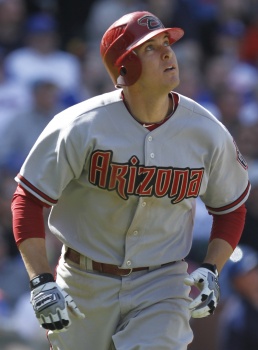
Kelly Johnson, 2B Diamondbacks
2010 Statistics: .310/.404/.726 (1.130 OPS%) 17 R, 8 2B, 9 HR, 18 RBI, 1 SB
I haven’t talked to Rob about it yet, but I would guess that he is glad I’m touching upon Kelly Johnson’s resurgence with the Diamondbacks.  We both have always been KJ fans since he burst on the scene with the Braves in 2005, but could never quite grasp the reasons for his decline over the past two seasons. When receiving regular playing time, I have always seen great value in Johnson as both a big league 2b and as a fantasy player.  In 2007, Johnson posted a .832 OPS% that featured career highs in both home-runs(16) and walks(79) in 521 at-bats, stats that are indicative of the essence of his success.  Patience.  That year, Johnson lead the NL in walks among second-basemen and saw an impressive 4.12 pitchers/plate appearance(#P/PA).  This season, he is off to the best start of his career with a .310 BA, 9 HR, 18 RBI, 14 BB, 1 SB in 84 at-bats.  While Johnson has always been regarded as a streaky player, his performance thus far has been nothing short of consistent and I believe that he is in the midst of his career season.  In those 84 at-bats, he has seen an impressive 4.36 #P/PA, which ranks 5th in the MLB and 1st among second basemen.  If Johnson even remotely continues at this pace, he will undoubtedly set new career highs in most offensive categories.  My prediction: 21 HR and 80 RBI

Oh yeah, did I mention that he has a 1.277 OPS% against left-handed pitching this year?

*The other day, I read a fantastic, comprehensive article by the Capitol Avenue Club that details the intricacies of Kelly Johnson’s career.

Andruw Jones, OF White Sox
2010 Statistics:  .274/.400/.694 (1.094 OPS%)   13 R, 2 2B, 8 HR, 11 RBI, 4 SB
If you didn’t already know, I am a White Sox fan.  Having said that, the first month of the season has left me utterly disappointed and concerned about what’s to come.  There have been a few bright-spots in the White Sox lineup, but I doubt that anybody could have predicted that Andruw Jones would be one of them.  Jones has affixed himself in the middle of the White Sox order thanks to his 8 HR(2 multi-HR games) and 11 RBI in just 62 at-bats.  Even more impressive has been the un-Andruw-Jones-like, plate discipline that has resulted in his 12 BB compared to only 18 K.  We can’t be talking about the same Andruw Jones, right? Wrong.  Jones is seeing a career high 4.61 #P/PA which raises an important question: is he really capable of reinventing his offensive approach at this point in his career?  Since he burst onto the scene with Atlanta, Jones has never really seemed to want to adapt to the rest of the league.  Even in his darkest hour on the Dodgers, he seemed totally complacent and unwilling to reconfigure his swing and approach.  However, there is definitely something different about Jones this season compared to his stints with both the Dodgers and Rangers.  In addition to finally shedding some pounds, Jones just looks comfortable playing baseball again.  The White Sox seem to be a nice fit for the 33 year old and his early production will only merit an increase in his playing time.  As long as Jones doesn’t remember who he has been over the past couple seasons, I see him capable of hitting .260 with 30 HR, 85 RBI and 15+ SB.

FHS/PVHS Round 1

April 22, 2010

fmnm

If you are unfamiliar with Four Corners or New Mexican high school baseball, this post will probably be meaningless to you.  However, if you are familiar with baseball in this area, then you know that this year is a very unique one for baseball in San Juan County.  Both Farmington High School and Piedra Vista High School have new management for the first time in over a decade.  Gurus Don Lorett and Dick Laughlin retired from their respective managerial positions after the 2009 season.  That was the first season since PV opened ten years earlier that they finished higher in the state tournament than FHS, and they were able to do it while graduating just five seniors, only 3 of which started.  Since PV opened, FHS has won 6 AAAA state titles including a 4-peat from 2005-2008.  Along with Eldorado, and Carlsbad, FHS has been the school with the deepest tradition in the state, winning titles in every decade since the 1960’s.  Thrice since PV opened have they fallen to FHS in the state championship.  It is the deepest rivalry in the state and never before has it seemed as though FHS was the underdog.

The new managers at FHS and PV respectively are Sean Trotter, Lorett’s assistant of 13 years, and Mike McGaha, FHS’s hitting coach since 2004.  When McGaha crossed town, he brought with him FHS’s strength and conditioning coach as well as the head JV coach, who handles PV’s stunning pitching staff.  Adding to the suspense of the rivalry is the fact that many of the top players from both schools play for the same club organization with management that has represented both schools.

At the top of the PV rotation sits UNM-signee, Jake McCaslandMcCasland boasts a fastball that has registered as high as 96 mph as well as three average off-speed pitches.  Following McCasland is everyday SS, Tim Bailey, who sits in the 86-88 mph range and who can reach back for 89 mph when he needs it.  Tim’s changeup and curveball can be above average, and he tends to get the ball on the ground well.  Following Bailey is junior, Dominic Moreno, who works in the 84-86 range from a low ¾ slot.  His fastball has excellent arm-side action, but his breaking stuff tends to be on one plane despite having above average tilt.  His changeup is better and also has good arm-side fade and some sink.  These three guys make up the deepest pitching staff either Farmington school has had since 2002, and the 4 and 5 are not bad either.  Senior, Chandler Joe, leads Farmington’s staff.  Joe works in the low to mid-80’s with an excellent changeup that plays his FB velocity up a tad.  Following him is utility player and UNM-bound, Eli Freese, who works in the mid to high-80s from a very low ¾ slot.  When Freese is in the strike zone, he dominates right-handed opponents because his fastball rides in very hard.  His secondary stuff (slider, curve, change, and splitter) can be equally devastating, but have occasionally been tough for Freese to get in the zone.

With a knee injury to FHS SS, Chris Weaver, PV’s lineup from the top down is head and shoulders above Farmington’s with the exceptions of 3B, Joe Cervantes, and Freese.  With a month left in the season, McCasland has already broken the school’s single-season HR record that was formerly held by Air Force-signee, Kyle Henke, in 2008.  Not to take anything away from Jake, but there are at least three players in the PV lineup equally skilled at the plate.  On paper, FHS is overmatched against PV in every way this season, but the same was true last year, and FHS was still able to wrap up their ninth consecutive District 1-4A title.  The FHS tradition of excellence is tough to overcome.

Well, PV had a very easy time overcoming it this time around. In front of a couple thousand fans they put up 4 runs in the first, and McCasland proceeded to toss a 1-hitter to lock up round 1 with a score of 5-0.  The war continues Tuesday with Freese on the mound against Bailey, and this should prove to be the more competitive of the two regular season bouts.

I think the community of Farmington is already anxiously awaiting the state seedings in hopes that PV and FHS will not meet until the title game.  The rivalry between the two schools has changed a lot over the last year.  The rivalry in the past has resulted in violence, vandalism, and a deep hatred for the opposing school that caused a sizeable rift in the framework of baseball in town.  With the new management a noticeable and long overdue burying of the proverbial hatchet seems to be taking place, and the community is benefiting from it.  Both coaches have been, at least superficially, very complimentary of the other school’s program and players in a number of interviews.  While the rivalry still exists and in many ways has never been stronger, in this particular season, it really does seem to be all about what happens between the lines.  It makes me proud to have once been a part of the same rivalry.

I am equally proud to be a Grinnell Pioneer today.  GC swept Illinois College at IC and has jumped out to 6 and 0 record in Midwest Conference play.  The Pioneers currently find themselves on the inside track to earning the host rights to the conference tourney in a month.  GO PIONEERS!

Mike Nodzenski, GC’s catcher, currently boasts slashes of .456/.518/.912.  Let’s just give this guy the MWC POY award now.  All-America anyone?  I say so.

Catch My Drift?

April 15, 2010

taylor After a most unpredictable and exciting first week and a half of the Major League Baseball season, I’ve noticed a trend that has become all too clear to GMs and fantasy owners alike.  They wish that they had Joe Mauer and his sweet, sweet 1.167 OPS%.  During the off-season, Mauer and the Twins inked a 8yr/$184mil contract that essentially made him a Twin for life.  Yes, that is an obscene amount of money, but why not?  Who wouldn’t shell out the big bucks for a 6’4”, 5-tool, left-handed hitting catcher? However, Mauer’s greatness also brings to light a vast discrepancy in the quality of catchers across the league.  In both the AL and NL Central, there are too many teams receiving little or no production from their catcher(s).  Yes, I know that it’s early in the season and I sympathize with how constricting and relenting the cold can be, but I am not surprised by the specific catchers that are struggling.  Some have been over-hyped while others have fallen victim to the minors.  Some are just too old.  I guess that what I’m really trying to say, is that I’m sure Brad Ausmus is feeling pretty, pretty, pretty, pretty good about being on the DL to start the season .
NL Central
Cubs:
Should we really attribute Geovanny Soto’s highly disappointing 2009 campaign to the “sophomore slump,” or do the Cubs have a greater problem on their hands?  Soto’s slow start to the current season is reminiscent of his slow start last season that ultimately resulted in a .218/.321/.381.  Entering Wednesday, Soto was just 2-for-15(.133) with no extra base-hits and three walks.  The Cubs don’t seem to have the patience that they did last year with Soto; Koyie Hill was given consecutive starts on Thursday and Friday in lieu of Soto’s lack of production.  In those two games Hill went 1-for-6 (.167), which means that Cubs’ catchers are hitting a combined .143.  But wait, it gets worse.  Neither Soto or Hill have an extra base hit and neither have tallied an RBI.  In 2008, Soto carried the Cubs on his back into the postseason and it seems as though he will need to do so again this year.  On a personal note, Soto is the skidmark on my fantasy team; he’s really making me look an asshole for expecting immediate results.

Astros:
As Griff alluded to in his previous article, this is going to be a painful year for the Houston Astros.  Rather than trying to solve any of their offensive deficiencies, the Astros deemed it best to sign RP Brandon Lyon to a 3yr/$15mil contract. After trying to produce a homegrown catcher for the better part of a decade(with minimal success), when do you give up?  Apparently, not quite yet.  Former top prospect J.R. Towles was given the opening day nod(by default) and has done nothing to prove that he deserves it.  Prior to Wednesday’s games Towles was 1-for-16(.063) and yet to draw a walk.  Towles initial struggles prompted the Astros to mix in Humberto Quintero, who has only responded by hitting .111.  Much like the Cubs, the Astros’ catchers are yet to drive in a run and seem highly unlikely to do so with any consistency.  I’m tired of seeing them play catcher roulette every season.  On the bright side, Jason Castro is lurking in the minors and seems destined to assume the catching duties at some point this season.  For the sake of Asros’ fans, let’s just hope that it is sooner rather than later.

  • Over the past three seasons, former teammate and catcher for my high school team, Jon Fixler, has given himself a name within the Astros organization.  Currently playing for the Lexington Legends(A), Fix reached Chorpus Christi(AA) last season after showing continual improvements and an ability to adapt to each level.  I also recently learned that he has a blog, through the Astros, where he reflects on his Minor League experiences.

Brewers:
Is it me, or are the Brewers just reusing and recycling veteran catchers?  With Jason Kendall’s reign of terror over Milwaukee complete, I would have liked to seen the Brewers stray from the path of employing another old, irrelevant catcher.  But of course, they signed Greg Zaun.  It could have gotten really crazy had the Cardinals not resigned Jason LaRue for the season.  Headed into Wednesday, Zaun’s 0-for-18 with two walks has been a black hole in an otherwise productive, Brewer lineup.  In an effort to ignite the lower third of the lineup Ken Macha has given George Kottaras increased opportunities to step up.  Kottaras has produced a .167/.250/.167 line that just screams, “Eat your heart out J.R. Towles!”

AL Central

Indians:
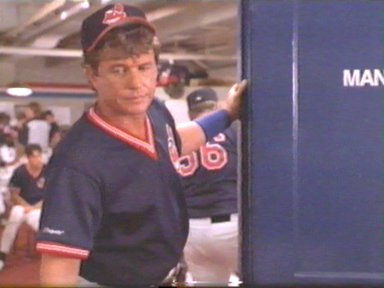
Where is Jake Taylor when you need him?  Although, at his age, I suspect that his level of production would rival those of Zaun and Kendall. That would have to be better than the Indians’ atrocious Marson/Redmond tandem, right?  Marson entered Wednesday’s action rocking a dismal .077/.143/.077, which makes Redmond’s .182/.250/.273 seem acceptable.  If you didn’t know already, the Tribe is just laying low before they unveil their coveted, catching-phenom Carlos Santana.  I’m really excited for that to happen, whenever it does, but for the time being, rough.

Tigers:
I’m going to go relatively easy on Gerald Laird because I still think he is a great, overall catcher.  However, he doesn’t have to report to me with that .056 batting average.  It is clear that Tigers are scheming over their catching situation based upon their choice to include Alex Avila on the opening day roster.  In his 69 career at-bats with the TIgers, the 22 year-old Avila has posted an impressive .910% OPS.  Avila could be a nice fantasy addition within the next couple weeks for those that have any of the players I just hacked into.

Why Didn’t They Just Walk Casey? The use of the intentional walk in Major League Baseball

April 14, 2010

casey

Saturday night, in the bottom of the 14th inning with the Padres up one run on the Rockies, manager Bud Black had a decision to make.  There were two outs and the tying run was on second.  Ian Stewart was at the plate and Chris Iannetta was on deck.  Black decided to walk Stewart, putting the winning run on base, and pitch to Iannetta (even though Iannetta had already gone deep in that game), who struck out to end the game.  He looked like a genius at the time, but things could’ve been much different had Iannetta ripped a two-RBI double down the right field line to win it.
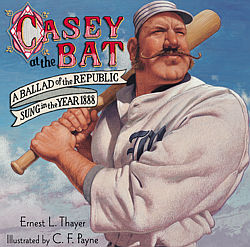
This reminded me of Ernest Thayer’s famous 1888 poem, “Casey At the Bat”.  For those who don’t know it, it can be found here.  The story details a team down by two runs with two outs in the bottom of the ninth inning.  Two weak hitters proceed to hit a single, then a double, which brings up the star hitter, “Casey,” with the tying run in scoring position and two out.
We all know how the story ends.  But what might a major league manager have done in this situation?  If he’s 2009 Manager of the Year Jim Tracy, he might have walked Casey.  And this seems to make sense.  First base was open and Casey represents the most feared hitter on the team, if not in the game.  In addition, Casey was likely a big, strong home run hitter built like Jason Giambiit’s unlikely that he had even average speed, and so he may not even have been able to score on a double from the next hitter.  What’s not to like?

The first thing not to like is that an intentional walk increases the expected number of runs scored in any inning (Source: Baseball Prospectus at http://www.baseballprospectus.com/statistics/sortable/index.php?cid=68778), regardless of how many are on base and how many are out.  Of course, this doesn’t mean it’s never a good idea—sometimes the hitter at the plate is significantly better than the one on deck, and sometimes the extra 1/3 of a run (or so) that the walk creates would be nearly meaningless to the outcome of the game.  In the top of the ninth, with the pitching team down a single run and with runners on second and third with two outs, an intentional walk does not hurt the pitching team in any significant way, because if that run were to eventually score, it would mean the difference between having to score three and four runs in the ninth inning—a scenario so unlikely anyway that only a small difference in ability between the on-deck hitter and the hitter at the plate would prompt an IBB.

Steven Biel did an analysis here: http://bleacherreport.com/articles/320766-rating-the-managers-by-intentional-walks of intentional walks issued in 2009, and he ranked the managers by how often they issued intentional walks that had no statistical chance of improving the pitching team’s chance of winning.  For this analysis, I care less about the manager and more about the aggregate picture of the walks issued.  In 2009, there were 1179 intentional—roughly one every two games.  Biel’s very conservative analysis (done with the help of Baseball Prospectus’s run prediction indexes) showed that 246 of these provided no help to the pitching team.  This is an amount in excess of 20%.  More than one in five times where the manager decides to go to the well with the intentional walk, it is a mistake.  Further, with 246 “bad” IBBs in 2,431 games in 2009, this means that once in every ten games (well over once per day) a manager is making a mistake and putting his team at a disadvantage by allowing another runner to reach base.

So to answer my own question earlier, issuing an intentional pass to Casey might have worked out all right.  But considering that Casey was probably batting in the #3 spot, walking him would have put the winning run on base with the cleanup hitter at the plate—likely providing a much better opportunity for joy in Mudville than the opposing team did by taking their chances with Casey.  However, Biel’s analysis suggests that many of the 30 major league managers would have chosen to walk Casey, as Bud Black did most recently on Saturday, April 10.  Taking into account the number of intelligent people in the United States who would leave well-paying jobs today for a chance to make $10 an hour as a major league manager, it does seem strange that managers so often make the move to put a runner on base when it makes no statistical sense to do so.

Why It Sucks To Be An Astros’ Fan

April 12, 2010

killerbs

As an avid, lifelong, true Astros fan, I have experienced bliss as well as turmoil.  It was only 5 years ago that the ‘Stros found themselves in the World Series.  Yet there is now a putrid taste in my mouth when I think of my beloved big league club.  How could this be?  What went so wrong that only 5 years removed from winning the NL pennant, Houston is now ranked as one of the worst organizations in professional baseball?
For starters, we can look at a couple declining stars.  While it hurts me to even utter these words (let alone type and post them for all to see) Lance Berkman and Carlos Lee are finally on the downhill track of their careers.  The Puma is always a health concern, even managing to find himself on the DL before the 2010 season even started.  2009 was the first season that Fat Elvis fell short of the 600 PA plateau since 2005, and only the 3rd time since he became an everyday player.  Secondly, his WAR, according to FanGraphs, tied a career low at 3.2 (as compared to previous years in the 6’s.)  While his BB rate increased last year from 14 to 17%, his K rate has been on the rise since 2005.  It made a jump from 15.4% in ’05, to 19.8% in ’06, and has continued to hover at, or above, the 20% rate since then.  All of this, along with the fact that Berkman is not getting any younger (he is 34 this year) tells me that we may be seeing the beginning of the end for the Big Puma.

Then there is Carlos Lee.  By most accounts, El Caballero had a tremendous season last year.  There are just a few stats that concern me.  The first being his O-swing%, or percentage of balls swung at outside of the strike zone.  This number stands at a gaudy 36.6% for last year; a whopping 13% above his career average.  The next problem I have is Lee’s isolated power.  Last year C. Lee posted a paltry .186 in this department.  You can chalk some of this up to age, (he turns 34 this June) but when you play in one of the most hitter friendly parks, Minute Maid, it makes you wonder a little. Even if you don’t want to look at the numbers, face the facts that most big leaguers do not have very successful careers once they reach the age of 34-35; including Berkman and Lee.

Well what about the guys we have coming up?  Sure there is Wandy and Pence, and maybe even Bourn will work out. (I am a big Bourn supporter despite what most critics predict.)  Ok, sure those are a few guys who have the possibility to be studs for a while.  But for those few guys, there are the J.R. Towles (a busted stud), Tommy Manzella (a 27 year old “prospect”), of the organization who have not panned out.  Sure, Houston is devoting new time and efforts into finding quality prospects internationally, especially in the D.R., but only time will tell how that works out.  For now, we are stuck with what little we have on the farm.
To top it off, we go and make Brandon Lyon one paid motherfucker at 15 mill for 3 years.  Why give that kind of money to a guy who has only had one season of 15 saves or more, has a career ERA of 4.23 as a reliever, and has never shown dominant stuff on the hill?  I don’t know why, and there may be more to it, as Mclane has shown that all these oddball signings come off the book at the same time in a few years.  But until then, we will have to settle with that putrid taste, and have to do enough other things during the summer to help reduce the strength of that taste.  One.