Daniel “Dee” Clark | The Golden Sombrero Baseball Blog | MLB, Fantasy, College & High School Baseball News

Posts belonging to Category Daniel “Dee” Clark


Top 50 Prospects: #4 – Shelby Miller

#4 Shelby Miller

St. Louis Cardinals

DOB: 10/10/1990

Previous Rank: 16

ETA: 2012

Aside from a team-issued suspension for being an idiot, Shelby Miller had an outstanding 2011 that only served to reinforce his spot as the top righty in the Minor Leagues.  He posted a 2.77 ERA in 25 starts across two levels including his final stop in Springfield where he collected 16 Double-A starts as a 20-year-old.  Yikes!  The kid struck out 170 guys on the season next to only 53 walks in just under 140 IP.  Again, Yikes!

Miller is special.

Year Age Tm Lg Lev W L ERA GS IP BB SO WHIP H/9 HR/9 BB/9 SO/9 SO/BB
2009 18 Quad Cities MIDW A 0 0 6.00 2 3.0 2 2 2.333 15.0 0.0 6.0 6.0 1.00
2010 19 Quad Cities MIDW A 7 5 3.62 24 104.1 33 140 1.246 8.4 0.6 2.8 12.1 4.24
2011 20 2 Teams 2 Lgs AA-A+ 11 6 2.77 25 139.2 53 170 1.181 7.2 0.3 3.4 11.0 3.21
2011 20 Palm Beach FLOR A+ 2 3 2.89 9 53.0 20 81 1.132 6.8 0.3 3.4 13.8 4.05
2011 20 Springfield TL AA 9 3 2.70 16 86.2 33 89 1.212 7.5 0.2 3.4 9.2 2.70
3 Seasons 18 11 3.17 51 247.0 88 312 1.223 7.8 0.4 3.2 11.4 3.55
A (2 seasons) A 7 5 3.69 26 107.1 35 142 1.276 8.6 0.6 2.9 11.9 4.06
AA (1 season) AA 9 3 2.70 16 86.2 33 89 1.212 7.5 0.2 3.4 9.2 2.70
A+ (1 season) A+ 2 3 2.89 9 53.0 20 81 1.132 6.8 0.3 3.4 13.8 4.05
Provided by Baseball-Reference.com: View Original Table
Generated 1/31/2012.

His fastball has tremendous sink and arm-side ride to go along with 94-97 mph of pace.  His changeup and curveball already get 50s, but they still have room to grow.  His breaker is tight with quality shape, but it is not consistent yet.  The changeup is ahead of the bender, and it features excellent fade that should allow him to neutralize lefties in the Bigs as he already has shown he can do on the farm.  Miller should open the year in Triple-A with the singular goal of developing his secondary stuff.  Should he prove to accomplish this early on in 2012, we see no reason for the Cardinals not to push for his promotion.

Miller is elite and, with a 6-foot-3 and projectable build as well as aggressive and competitive makeup, should steamroll his way to Busch and challenge for the ace role there immediately.  We expect Miller to annually receive CY votes.

Top 50 Prospects: #5 – Gerrit Cole

#5 Gerrit Cole

Pittsburgh Pirates

DOB: 9/8/1990

Previous Rank: N/A

ETA: 2013

Cole was the first guy off the board in 2011, and it is pretty tough to make a strong case against that pick (except for the $8 million price tag).  We did not view him as the top guy available, but no one could blame Pittsburgh for viewing him as just that either.

Cole has reached well beyond the 100 mph plateau, and his changeup was the best changeup of any draft class in recent memory.  He also features a knockout slider that routinely gets 60 grades.  He has a terrific arsenal of pitches and has average or better command as well. His mechanics are hit and miss, though, which is why we liked several guys a little more than Cole going into the draft.  With someone of his caliber, it’s really just nitpicking.  Gerrit Cole has a chance to be the best pitcher in baseball and immediately ascended to the top of the Pirates’ rankings ahead of noteworthy players like Jameson Taillon and Starling Marte.

Cole looked a little sloppy in the AFL, but he still was able to make five starts and record 15 innings of professional baseball.  Let me just take this time to mention how terrific we at The Sombrero think the AFL is, especially for those guys like Cole and Hultzen who signed late and are looking to snag their first few starts of professional baseball before winter shut-downs.  Anyway, Gerrit Cole is absolutely a stallion and he should debut early in 2013.

Top 50 Prospects: #6 – Julio Teheran

#6 Julio Teheran

Atlanta Braves

DOB: 1/27/1991

Pre-2011 Rank: 13

ETA: 2011

Teheran is the kind of guy every team loves to see atop their prospect list.  Good build, athletic, aggressive, good makeup.  Teheran is all of these and more.  He features a four-pitch arsenal with his fastball, coming in anywhere from 94-97 mph, somehow not the best pitch he has.  He also features a double-plus changeup with tremendous fade and plane.

Year Age Tm Lg W L ERA G GS IP BB SO WHIP H/9 HR/9 BB/9 SO/9 SO/BB
2008 17 ATL-min Rk 1 2 6.60 6 6 15.0 4 17 1.467 10.8 1.2 2.4 10.2 4.25
2009 18 ATL-min Rk,A 3 4 3.65 14 14 81.1 18 67 1.180 8.6 0.4 2.0 7.4 3.72
2010 19 ATL-min A+,AA,A 9 8 2.59 24 24 142.2 40 159 1.037 6.8 0.6 2.5 10.0 3.98
2011 20 ATL-min AAA 15 3 2.55 25 24 144.2 48 122 1.182 7.7 0.3 3.0 7.6 2.54
2011 20 ATL NL 1 1 5.03 5 3 19.2 8 10 1.475 9.6 1.8 3.7 4.6 1.25
1 Season 1 1 5.03 5 3 19.2 8 10 1.475 9.6 1.8 3.7 4.6 1.25
162 Game Avg. 9 9 5.03 43 26 167 68 85 1.475 9.6 1.8 3.7 4.6 1.25

His mechanics are much cleaner now than they were at this time last year, and he should open the season in Atlanta.  He made five appearances for the big club in 2011 and was bad, but he was also 20, and the ceiling on a guy like Teheran barely exists.  The only thing holding him back right now is his breaking stuff.  His slider and curveball are both below-average offerings, and we personally think anyone with Teheran’s arm acceleration stands a better chance of learning to be aggressive out front with a slider than a curveball.  His Triple-A numbers are outstanding, posting a 2.55 ERA in 144.2 innings.  He struck out 122 and walked 48 and only allowed five Triple-A dingers all year.  He’s a stud and has really nothing left to prove on the farm.  We expect Teheran to challenge for the NL Rookie of the Year award and then for some Cy Young’s in a few years.


Top 50 Prospects: #7 – Anthony Rendon

#7 Anthony Rendon

Washington Nationals

DOB: 6/6/1990

Pre-2011 Rank: N/A

ETA: 2013

Rendon was our top guy going into the 2011 draft, injured or not.  This kind of bat is not common.  It might be draftable every five years or so, and it very rarely if ever can play a premium defensive position, let alone play it well.  Yeah, Anthony Rendon is a tremendously valuable prospect for the Nationals and should challenge for MVP votes as early as 2014.

When healthy he is a double-plus hit tool player, with plus present power with a chance at a 70 in that category too.  He has a plus eye, a plus glove, and a plus arm.  His speed is behind the other tools, but it is good enough for 2B if Washington decides to go with him there.  If that happens, then the club is looking at an infield of Ryan Zimmerman, Danny Espinosa, Rendon, and Mike Morse with Wilson Ramos behind the dish – every single guy on the dirt has a chance to make the NL All-Star squad.

Rendon signed late, so he has no professional statistics to assess, but we’d be surprised if he doesn’t go straight to Double-A and join Bryce Harper in the middle of the order for Harrisburg in the Eastern League.  We don’t see any reason that Rendon can’t force his way into Washington before the 2012 season is over.  Because he has such terrific makeup, adapting to professional baseball should be quite easy for him.  We expect Rendon to play a decade of excellent professional baseball with a chance to make the All-Star team every single season.  Aside from Bryce Harper, he is the top position prospect in the game.

A More Positive Way to View Steroid Abuse within Baseball

This week Ryan Braun accepted the National League MVP award amidst perhaps more controversy than has ever before been associated with a postseason award.  Quite obviously Braun has let down a great deal of people if he is indeed proven guilty of knowingly abusing illicit drugs to enhance his performance on the field.  While there is wiggle room within that last sentence to suggest that Braun did nothing wrong even if he is found guilty of abuse, his reputation is forever tarnished.  There is a very realistic chance that his name will be left off of ballots in the future for single season awards as well as Hall of Fame ballots upon Braun’s retirement.

We at The Sombrero certainly side with our generation in retaliation against the tyranny of the elderly BBWAA members, but their hold is not likely to be relinquished for over a decade.  Braun’s ethical failure obviously casts the game in a dark shadow that seemingly has shrouded the game for two decades now, but is there anything positive that young players can take from these years of shame that has bettered the game for the long term?  We think so.

Every time I return home to Farmington for a break from school, I lift on a near daily basis at one of two local gyms on my side of town.  I have never been to either without seeing a teenage player or one in his early 20s working out as well.  Whether these players are professionals home for the offseason, collegiate players home on holiday break, high school kids fresh off of fall or winter practice, club guys on off nights, or middle school kids new to high school athletics and familiarizing themselves with the weight room for the first time, these players all are utilizing reasonably advanced physical training techniques specifically geared toward baseball athleticism.  Rare is it nowadays for any kid to succeed on the field without training on the track or in the weight room both in and out of season.

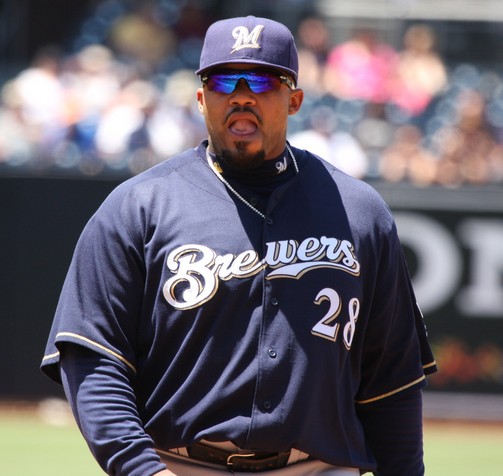
I am not attempting to suggest that the reason these players are training athletically is an attempt to emulate steroid abusers of today and of yesteryear, but even offseason workouts were less developed in the days before PED abuse.  Watching guys like Jose Bautista and Prince Fielder go very long without prototypical bodybuilder frames should come as encouragement to young hitters.

Prince and Bautista are quite noteworthy for their specific workout regimens within the game, and while neither looks like Jose Canseco did in the late ‘80s, they still represent an end to hard work in the gym.  Both players have had to spend their entire careers attempting to overcome genetic slighting, and they both have done so magnificently.  These players are less of the model and more like today’s young players.  We all spend our lives both fighting and attempting to enhance our own genetic makeup within the game, and the steroid era in baseball, which I prefer to think of as the fitness revolution in baseball, demonstrated the lengths that players can go legally and illegally to do so.

While today’s game is policed much more thoroughly and the rules are enforced far more harshly than in the past, the hard work training in the gym and at the track hasn’t left the game and likely never will.  While we cannot thank steroids for that, we can thank many steroid abusers as well as quite likely many more non-abusers who were forced to train alongside those cheaters simply to share the same field.  Today’s young players carry that desire with them in greater frequency than ever before, and it is very refreshing for former players like myself and the other writers here at The Sombrero.

Editor’s note: If you enjoyed this article, be sure to check out Dee’s other work: Today’s Prospect Landscape: Hitters vs. Pitchers, The Connie Mack World Series vs. Area Code Games, and How Division III Players Become Draft Prospects.