Baseball Philosophy | The Golden Sombrero Baseball Blog | MLB, Fantasy, College & High School Baseball News

Posts belonging to Category Baseball Philosophy


Why Didn’t They Just Walk Casey? The use of the intentional walk in Major League Baseball

April 14, 2010

casey

Saturday night, in the bottom of the 14th inning with the Padres up one run on the Rockies, manager Bud Black had a decision to make.  There were two outs and the tying run was on second.  Ian Stewart was at the plate and Chris Iannetta was on deck.  Black decided to walk Stewart, putting the winning run on base, and pitch to Iannetta (even though Iannetta had already gone deep in that game), who struck out to end the game.  He looked like a genius at the time, but things could’ve been much different had Iannetta ripped a two-RBI double down the right field line to win it.
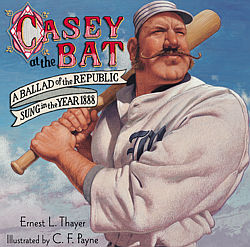
This reminded me of Ernest Thayer’s famous 1888 poem, “Casey At the Bat”.  For those who don’t know it, it can be found here.  The story details a team down by two runs with two outs in the bottom of the ninth inning.  Two weak hitters proceed to hit a single, then a double, which brings up the star hitter, “Casey,” with the tying run in scoring position and two out.
We all know how the story ends.  But what might a major league manager have done in this situation?  If he’s 2009 Manager of the Year Jim Tracy, he might have walked Casey.  And this seems to make sense.  First base was open and Casey represents the most feared hitter on the team, if not in the game.  In addition, Casey was likely a big, strong home run hitter built like Jason Giambiit’s unlikely that he had even average speed, and so he may not even have been able to score on a double from the next hitter.  What’s not to like?

The first thing not to like is that an intentional walk increases the expected number of runs scored in any inning (Source: Baseball Prospectus at http://www.baseballprospectus.com/statistics/sortable/index.php?cid=68778), regardless of how many are on base and how many are out.  Of course, this doesn’t mean it’s never a good idea—sometimes the hitter at the plate is significantly better than the one on deck, and sometimes the extra 1/3 of a run (or so) that the walk creates would be nearly meaningless to the outcome of the game.  In the top of the ninth, with the pitching team down a single run and with runners on second and third with two outs, an intentional walk does not hurt the pitching team in any significant way, because if that run were to eventually score, it would mean the difference between having to score three and four runs in the ninth inning—a scenario so unlikely anyway that only a small difference in ability between the on-deck hitter and the hitter at the plate would prompt an IBB.

Steven Biel did an analysis here: http://bleacherreport.com/articles/320766-rating-the-managers-by-intentional-walks of intentional walks issued in 2009, and he ranked the managers by how often they issued intentional walks that had no statistical chance of improving the pitching team’s chance of winning.  For this analysis, I care less about the manager and more about the aggregate picture of the walks issued.  In 2009, there were 1179 intentional—roughly one every two games.  Biel’s very conservative analysis (done with the help of Baseball Prospectus’s run prediction indexes) showed that 246 of these provided no help to the pitching team.  This is an amount in excess of 20%.  More than one in five times where the manager decides to go to the well with the intentional walk, it is a mistake.  Further, with 246 “bad” IBBs in 2,431 games in 2009, this means that once in every ten games (well over once per day) a manager is making a mistake and putting his team at a disadvantage by allowing another runner to reach base.

So to answer my own question earlier, issuing an intentional pass to Casey might have worked out all right.  But considering that Casey was probably batting in the #3 spot, walking him would have put the winning run on base with the cleanup hitter at the plate—likely providing a much better opportunity for joy in Mudville than the opposing team did by taking their chances with Casey.  However, Biel’s analysis suggests that many of the 30 major league managers would have chosen to walk Casey, as Bud Black did most recently on Saturday, April 10.  Taking into account the number of intelligent people in the United States who would leave well-paying jobs today for a chance to make $10 an hour as a major league manager, it does seem strange that managers so often make the move to put a runner on base when it makes no statistical sense to do so.

Battle to the Mistake

April 12, 2010

Plan the work, work the plan.  This is a mantra that I heard over and over again while pitching for the University of Arizona.  Thanks Coach Lopez.  It might be one of the best pieces of advice I have ever heard.  It transcends the baseball field and carries over in to the real-life sector as well.  Regardless, it was the first thing that came to my mind after reading fellow authors Justin Abramson and Dee Clark’s opposing pieces on hitting philosophy.  As a coach, I rely heavily on teaching my hitters to plan their work, and work their plan.  When it comes to hitting, I want them to plan on hitting the mistake.

As a former pitcher, I am quite familiar with what quality hitters do with mistake pitches.  They shit all over ‘em.  It never mattered if it was the first pitch or the 8th pitch of the at-bat either.  It only mattered that the pitch was not where it was supposed to be.  As a hitting coach, I now work to instill this idea in all of my hitters.  I preach, “Battle to the mistake.”  If I were to subscribe to Dee’s philosophy this might mean trying to work a 9 pitch sequence.  On the other hand, if I were to subscribe to Justin’s philosophy, this would mean that I should jump at the first fastball I see in the sequence.  While I tend to be more conservative in my plate approach (I was schooled by Dee in the ideas of plate approach) I still am very fond of seeing a good pitch early and jumping all over it.  Sometimes pitchers will attack the zone early with fastballs to get ahead, and this often times leads to a pitch finding itself traveling over too much of the white, or heart of the plate.  Other times, especially in later or more meaningful at-bats, a hitter may not see a mistake pitch until the 4th, 5th, or even 6th pitch of the AB.  If the latter is the case, the hitter must be disciplined enough to withstand the pitchers attack until the pitcher makes a mistake.

No matter when the mistake pitch is thrown, the hitter must have it in his mind to attack the mistake.  When dealing with high caliber baseball there is usually just one mistake pitch thrown per AB (if that.)  This means that if the hitter neglects to take a chance (swing) at the mistake, he will more than likely end up swinging at a pitcher’s pitch and have difficulty squaring up the baseball, thus leading to a probable out.  This is why it is so important to take advantage of the mistake, no matter when it occurs.  You can bet the farm that you will not get any second chances that AB.  I guess what I am trying to say is that as a hitting philosophy, I believe in hitting the mistake.  All pitchers make them, so why not try to hit the one pitch in the sequence that the pitcher wishes he could get back?  While the more pitches you see tends to give you a higher percentage chance of seeing a mistake, what happens if the mistake is that 0-1 CB that hangs in the zone?  You bang the damn thing.  Just ask Pujols, or Longoria, or any other high caliber hitter in Major League Baseball.  Taking advantages of mistakes trumps any other hitting approach.  So plan your work and work your plan, and battle to the mistake at the dish.  This mentality, or philosophy if you will, will give you the highest percentage opportunity for success.  I’ll put a Griffin Phelps guarantee on that one.  One love, I’m out.

Are Offensive Signals Necessary?

April 7, 2010

bad

In a telephone conversation with Griff the other night, I was stunned when he told me that his C-Teamers missed a whopping 19 signals in double-dip.  Immediately I wondered why Griff was giving his hitters 19 signals over two games in the first place.  I considered that we were talking about young players developing in a system, and obviously a necessity for that development is knowledge of the club’s signals.  Still, this scenario reopened an internal debate that I have had since I first realized how foolish any and all hit-and-runs are.  Are signals from base coaches a necessary component of the game, or are they simply another piece of the game’s antiquity?

Last summer, I coached third with basically three signals and no indicators.  Two of the signals were green-light-types, and the other was the take sign which was simply me raising my index finger.  Everyone in the stadium knew when we were bunting because I basically yelled to the hitter to bunt.  We bunted very, very sparingly.  Our runners knew who had the green to go and who didn’t, so I basically did not give signs across the diamond.  Guys who could drag knew when to drag because I told them when good times were.  Obviously we did not have an hit-and-run sign because forcing a hitter to swing at whatever the pitcher throws is a bad way to prevent outs.

Was our offense in any way lacking because we did not have sophisticated signals?  Was it inhibited by the fact that we had no secret strategies for run creation?  First, what is each offensive player’s objective at the plate?  To get on base.  No player needs to be reminded of this by a coach.  What about sacrifice bunting?  This is 2010.  How about stealing bases?  Utilizing a simple green light allows the player the freedom to gauge his own chances while ensuring that he does so in a reasonable situation.  What good can come from sophisticated signals?  I guess there are times when a delayed steal or get-picked sign could be advantageous.  Answer me this, though: would yelling across the diamond at a runner to get picked change the outcome?  Probably not.  More importantly, does the limited frequency of plays such as these justify using practice time for them?  Of course not.

Signs can’t possibly hurt.  The problem, however, arises when players forget what the real goal is because they are too busy hitting-and-running or leaving early.  Hitters are there to reach base.  Runners are there to touch home.  OBP is the primary predictor we know of for run creation.  Hitters hopefully don’t need a signal for getting on base.  Varying from this default setting, therefore, is likely only to reduce run production.  By that line of reasoning elaborate signals should only be given when trying to score fewer times.

Work That Wire

April 6, 2010

Working the waiver wire; who wants to worry about that?  Not many people work the waiver wire correctly.  Too often I hear people talking about, “Oh I don’t need to worry about that.  My guys are doing just fine.”  Or, “Who could there possibly be that is better than anyone I have on my bench already?”  Sure, you might not need a guy, but why not take a flyer once in a while?  Find a guy on a hot streak to replace that cold bat.  Or how about finding that arm for a quality spot start?
Working the wire is all about timing.  More often than not, if you are willing to take a risk, an educated one, it pays off big time.  Me, I have three different times where I try to use the wire to my advantage; spot start SP’s, a bat due for a good streak, or just to horde a guy before anyone else in my league can grab him.  Let’s take a look at spot starts.
Spot starting a pitcher is an excellent way to take advantage of quality matchups to help boost your pitching stats.  Before I go grab just anybody off the wire though, I always check trends.  The first trend I check is the pitcher’s home/road splits.  Don’t check just for the current season though.  Make sure to view career trends.  Obviously, the larger the sample size, the more accurately you can make your decision.  I like to use Baseball-Refernce.com for this.  They have a vast amount of data that can be used for just about anything you want.  If a guy has a huge difference in is home/road splits, let’s say road for this example, then take a look at his next couple of starts.  Who is he facing?  Where is the game played?  If you like who the pitcher is going against, i.e. the Pirates, take a look at line-ups.  How many lefties/righties is he facing?  What are the pitcher’s splits there?  Also, I recommend taking a look at what the pitcher has done over the past two-three years.  Two years ago, I was able to grab Cliff Lee off the wire after two starts.  Most people in my league laughed, and told me he was a fluke.  What they forgot to recognize was that only two years prior, Cliff Lee was being called a future Cy Young candidate by scouts.
What about hitters?  How do you find the guy that nobody is talking about?  I like to take a bit more risk with these type of guys, because if it doesn’t work out, so what.  It’s not like you’re losing much if you drop a guy from your roster that never plays.  Once again, I like to take a look at the next three or four pitchers that said hitter is facing in the coming days.  What type of success rate has he had over his career versus these guys?  I especially like to look at a hitter’s isolated power in this scenario.  That tells you a lot about how often the guy squares up balls, and that is the most important.  Even if he has a multitude of K’s, I am always willing to take a chance if the majority of balls hit are hit hard.  I also always take a chance on a guy riding a hot streak.  He’s 9 for his last 15?  Fuck yea I can find a spot on my bench for that guy the next few days!
The last reason I like to scour the wire is a simple one.  I want to prevent the other teams from getting something that I could potentially have.  Even if he just sits on my bench and I don’t record his stats, at least I know that nobody else is going to either.  This comes in handy late in the season when a few SB’s or RBI’s means trading spots in the standings.  Once again, don’t be afraid to subscribe to the theory of, “Even if I get nothing out of this guy, I didn’t lose anything in the player I dropped to clear roster space.”
All in all, working the wire can turn out to be pretty fruitless.  I easily make more than 100 transactions a year.  I may only keep a guy for a day and turn around and drop him for the guy he replaced the previous day.  With bench players, there is never a reason to fret over dropping them.  Most importantly, don’t be afraid to take a risk.  So go out there, find that diamond in the rough, and turn it into a thing of beauty.  One.

Patience is for Suckers: The Case for Swinging First-ball, Fastball

April 1, 2010

Many coaches teach that the best way to approach hitting is to work the count against a pitcher.  After all, the more pitches a pitcher must throw, the better chance a hitter has to time his delivery, get a sense for his stronger and weaker pitches and learn what he might throw in certain situations.  This not only helps the hitter, these coaches argue, but also the team.  If a pitcher consistently has to throw four or more pitches to every hitter, he will be out of the game relatively quickly, even if he is pitching effectively.

As a hitter, I always looked at it differently.  I felt that the first pitch I saw during an at-bat was often the best one.  I also believed that as I got deep into the count, the pitcher would be able to dictate the at-bat more and force me to swing at pitchers’ pitches.  Further, true in all levels of baseball but especially in high school, pitchers are taught above all to get ahead of the hitter. This usually means that on the first pitch, pitchers will try to throw a strike, typically a fastball.  Very rarely will a pitcher start off by trying to get a hitter to chase an offspeed pitch out of the zone.  This only begins to happen when pitchers are already ahead of hitters—perhaps after the hitter has taken a quick strike or two.

Looking at the numbers, here are the batting averages by count in MLB:
0-0 = .344
1-0 = .341
2-0 = .351
3-0 = .394
0-1 = .324
1-1 = .327
2-1 = .338
3-1 = .368
0-2 = .166
1-2 = .178
2-2 = .195
3-2 = .233
Source: Baseball FactoryBlog: A Premier Scouting Partner for Baseball America http://baseballfactory.com/blog/labels/batting%20average.html

Looking at these numbers, one thing becomes clear—the only hitter’s counts better by a statistically significant amount than the first pitch are 3-0 and 3-1.  This makes sense—in these situations, pitchers are often forced to throw a fastball strike or risk a walk—a “free pass”.  Conversely, once a hitter gets two strikes on him, his batting average drops like a rock.  This also makes sense, because when a pitcher has worked an 0-2 or 1-2 count, he can afford to throw an offspeed pitch outside the strike zone in hopes that the hitter will chase.  The hitter also has to protect the plate, meaning that if the pitch is close, he has to swing.

Further, home runs occur most often in MLB on the first pitch—more often than in any other count.  0-0 counts also see the most doubles, triples and RBI.  While of course some of this can be explained by the fact that every hitter sees a 0-0 count in every at-bat, it also leads me to believe that hitters, when coming up to the plate looking to be aggressive, can jump on that first pitch well if the pitcher is just trying to get ahead in the count.

Finally, we can take a look at the OBP numbers for after the appropriate count.  This is calculated slightly differently because obviously, no one (not even Barry Bonds in 2001) can walk on anything other than a three-ball count, so the OBP for 1-0 represents the OBP for all hitters who begin their at-bat with ball one, regardless of how many more pitches they see:
1-0 .394
2-0 .516
3-0 .760
0-1 .281
1-1 .321
2-1 .404
3-1 .595
0-2 .211
1-2 .242
2-2 .306
3-2 .263
Here, we see a much sharper rise from 1-0 to 3-0.  However, more interesting is that we see a fall in OBP from 2-2 to 3-2.  We do see OBPs rise for non-two-strike counts.  Contrary to batting average, OBP is actually better on 2-1 than on 1-0.  Still, the biggest thing to notice is that the two-strike OBPs represent three of the lowest four on the chart.  Sure, great hitters like Luke Appling may have been able to foul pitches away (once even 24 in an at-bat!) until they found one they liked, but in reality, the advantage is to the pitcher in these situations.

In conclusion, I would draw the conclusion that if you have runners on in front of you and are trying to get a base hit to drive them in, taking pitches and getting deep in the count would be a horrible idea.  If you are trying to start an inning off, it’s still not a good idea to get too deep in the count because two-strike counts lead to the poorest OBPs, but taking pitches makes more sense in this situation.

I certainly don’t expect everyone to agree, not only because this is anathema to conventional wisdom on the game today, but because my baseball career was the shortest of all of this blog’s contributors.  But in one hitter’s opinion, the best way to hit with a two-strike count is to not get in one.