College Baseball | The Golden Sombrero Baseball Blog | MLB, Fantasy, College & High School Baseball News

Posts belonging to Category College Baseball


A More Positive Way to View Steroid Abuse within Baseball

This week Ryan Braun accepted the National League MVP award amidst perhaps more controversy than has ever before been associated with a postseason award.  Quite obviously Braun has let down a great deal of people if he is indeed proven guilty of knowingly abusing illicit drugs to enhance his performance on the field.  While there is wiggle room within that last sentence to suggest that Braun did nothing wrong even if he is found guilty of abuse, his reputation is forever tarnished.  There is a very realistic chance that his name will be left off of ballots in the future for single season awards as well as Hall of Fame ballots upon Braun’s retirement.

We at The Sombrero certainly side with our generation in retaliation against the tyranny of the elderly BBWAA members, but their hold is not likely to be relinquished for over a decade.  Braun’s ethical failure obviously casts the game in a dark shadow that seemingly has shrouded the game for two decades now, but is there anything positive that young players can take from these years of shame that has bettered the game for the long term?  We think so.

Every time I return home to Farmington for a break from school, I lift on a near daily basis at one of two local gyms on my side of town.  I have never been to either without seeing a teenage player or one in his early 20s working out as well.  Whether these players are professionals home for the offseason, collegiate players home on holiday break, high school kids fresh off of fall or winter practice, club guys on off nights, or middle school kids new to high school athletics and familiarizing themselves with the weight room for the first time, these players all are utilizing reasonably advanced physical training techniques specifically geared toward baseball athleticism.  Rare is it nowadays for any kid to succeed on the field without training on the track or in the weight room both in and out of season.

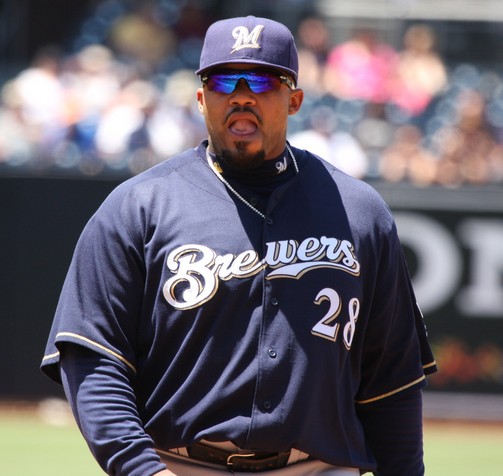
I am not attempting to suggest that the reason these players are training athletically is an attempt to emulate steroid abusers of today and of yesteryear, but even offseason workouts were less developed in the days before PED abuse.  Watching guys like Jose Bautista and Prince Fielder go very long without prototypical bodybuilder frames should come as encouragement to young hitters.

Prince and Bautista are quite noteworthy for their specific workout regimens within the game, and while neither looks like Jose Canseco did in the late ‘80s, they still represent an end to hard work in the gym.  Both players have had to spend their entire careers attempting to overcome genetic slighting, and they both have done so magnificently.  These players are less of the model and more like today’s young players.  We all spend our lives both fighting and attempting to enhance our own genetic makeup within the game, and the steroid era in baseball, which I prefer to think of as the fitness revolution in baseball, demonstrated the lengths that players can go legally and illegally to do so.

While today’s game is policed much more thoroughly and the rules are enforced far more harshly than in the past, the hard work training in the gym and at the track hasn’t left the game and likely never will.  While we cannot thank steroids for that, we can thank many steroid abusers as well as quite likely many more non-abusers who were forced to train alongside those cheaters simply to share the same field.  Today’s young players carry that desire with them in greater frequency than ever before, and it is very refreshing for former players like myself and the other writers here at The Sombrero.

Editor’s note: If you enjoyed this article, be sure to check out Dee’s other work: Today’s Prospect Landscape: Hitters vs. Pitchers, The Connie Mack World Series vs. Area Code Games, and How Division III Players Become Draft Prospects.


Subscribe to The Golden Sombrero by Email


Today’s Prospect Landscape: Hitters vs. Pitchers

When a reader of The Sombrero commented on our write-up of Bubba Starling, it became apparent that implicit within our rankings, we were making a claim regarding the entire prospect landscape.  After a little reflection about how we could both be somewhat down on Starling and also rank him as high as we did, it was obvious that we were boosting hitters to levels that they might not quite deserve relative to the pitchers they were ranked alongside.

For instance, Tyler Skaggs and Archie Bradley are found adjacent to Anthony Rizzo and Devin Mesoraco in our rankings.  Skaggs and Bradley both project as #2 arms at worst.  Both are very young as well and have obvious paths to Big League action.  Skaggs might even be a member of the 2012 defending NL West Champion rotation in Phoenix.  Bradley should breeze through the Minors and wind up in a Major League rotation within three years, barring injury of course.  There is simply nothing in the way of these two aces becoming very good Major League contributors on a championship caliber club.  That’s not to say it’s by any means a done deal or even highly likely that this will be the case.

However, the idea is that there are no reasons to expect these two arms to fail in their ascent.  Mesoraco and Rizzo are older than both of the pitchers, both are large-bodied guys who likely are inflexible in terms of positioning, and both have already failed in Major League auditions, although the samples were small and both were rushed to some extent.  Nevertheless, both players are assumed to begin 2012 in Major League uniforms even if Rizzo is not shipped somewhere between now and then.  It’s no secret that we are quite high on both hitters and even higher on Starling, but there are serious flaws apparent in each case, and it is certainly conceivable that they may never succeed in the Show.  Rizzo is a below-the-ball hitter who approaches the hitting zone using a nonlinear approach that takes entirely too much time to barrel up on pitches on the inner half with decent pace.  Additionally, Rizzo plays first base with minimal chance of successfully sliding to a more valuable defensive spot.  The Padres even brought back Yonder Alonso in the Latos deal, effectively dropping Rizzo to second or third on the depth chart at 1B.  Mesoraco has less noticeable flaws, but he still has been injury prone and at-best will probably cap at under 500 plate appearances in a season, a huge reason that the Royals slid Myers away from the dish and the Nats did the same with Harper.

Basically, within the top 20 prospects as well as within the top 50, there is far more to like about the pitchers and far less flaws that might keep them from Big League success.  Even within the top 10, which again features more pitchers than hitters, we really only see Harper with no obvious flaws or roadblocks that might or should keep him from an all-star career.  We see injury, poor stats, and lack of positional flexibility or ability to even be average on D in each case except Harper’s.  Yet with our pitchers we see nothing but elite stuff, elite command, elite makeup, and obvious paths to innings.  Don’t get me wrong, the hitters are elite prospects and deservingly are considered among the top prospects in the game, but why if the pitchers are simply better?

An obvious disparity exists between hitting and pitching prospects collectively.  Pitchers are ahead of hitters by a lot.  What’s more, hitters tend to reach their peak years earlier than pitchers and, therefore, should be ready to contribute at the Major League level before pitchers of the same age.  How should we adjust the values that we apply to prospects in light of this?

In the case of pitchers, it is far easier to assign grades to pitches than it is to, say, hit tool.  Evaluating hit tool requires at least several looks and is far easier to do when a player is facing quality pitching.  Brandon Nimmo went in the first round, but slapping grades on his skills and makeup was far tougher to do than it is for someone like Bradley, who has reached triple digits with his fastball.  Additionally, as professionals, pitching prospects, specifically rotation guys, pitchers only take the rock every fifth or sixth day leaving most of the week to train physically in a relatively low-stress environment.  This has likely never before been such a massive advantage for pitchers simply because of the way PED abuse is policed today.

Entire workouts must be totally altered to accommodate the grueling season and average day of a professional or even collegiate athlete.  Pitchers have a great deal more time to train athletically at high intensity in season than hitters do.  Naturally, we should expect pitchers to be ahead of hitters more so today than ever before if for no other reason than that pitchers should be athletically better conditioned than hitters since hitters (and pitchers) face far greater difficulty abusing drugs than they ever have before.

The NCAA has done professional baseball very few favors, but the incentive for pitchers to enter professional baseball at younger ages is greater than that for hitters and always has been.  As was the case with Rendon and even Harper, the two best offensive prospects in the game who retain rookie status, a hitter must be frequently evaluated and is usually required to display his skills at top showcases and tournaments with and against top clubs and schools…or go to college where that happens nearly every game in top conferences.  Prep pitchers who feature mid-90’s heat will draw cross checkers nearly every start and truly are far less required to show it off against quality opponents.  A 60 fastball is a 60 fastball whether throwing it to Griffey or throwing it to a geriatric patient.  What is a 60 hit tool, though?  Implicit within that grade is a level of consistency that is not necessarily required in the same way with regards to fastball scores.

Additionally, when pitchers are evaluated, the system is far easier to apply.  Fastball velocity? Fastball activity?  Fastball command?  Secondary stuff?  Size? Mechanics? Makeup?  It’s very easy to understand how valuable each of these is relative to each other.  Few successful pitchers can last long in the game if they can’t pitch off of their fastballs due to a lack of pace, action, or command.  Clubs tolerate a lack in effective secondary stuff for years, but can a team tolerate a lack of hit tool in young hitters?  “Not really” should be the answer, but it is far more challenging to ensure that the top hit tools or even potential top hit tools are evaluated as accurately during amateur years.  In addition, clubs tolerate pathetic hitters in exchange for stellar up-the-middle defense.  Jose Iglesias was in many top prospect lists a year ago despite using a wet towel for a bat.  He has virtually no chance of long-term employment as a Major Leaguer at anything more than the minimum because glove-first middle guys simply come cheaply due to a far greater supply than demand.  And yet he still made onto many lists including our own.

The point is that a total reevaluation is required when ranking prospects.  The most important tool in baseball is the hit tool.  It is more important than every other offensive tool by no small margin and more valuable than any pitching tool including fastball velocity.  Consider Robbie Erlin.  While we were quite aggressive with our ranking of Erlin, it had very little to do with his fastball velocity, which is not all that impressive.  Erlin, however, commands his stuff better than any other young pitcher in the game in our opinion and is perfect for his home yard.  Good luck to any hitter who is planning to make a career out of hitting who lacks an average hit tool.  Selling out for pull power still requires the ability to barrel up on mistakes, a tough skill to master if barreling up has proven difficult in the past.  And yet so few players in the Minor League landscape today possess impact hitting ability, let alone middle-of-the-order ability, that it has shifted the balance strongly in favor of pitchers.

Arlo and I attempted to account for this in The Sombrero’s rankings, which is why you see Rizzo and Mesoraco next to Skaggs and Bradley and why you’ll see Machado and Montero next to Gerrit Cole and Julio Teheran.  Which of these do you think we are more confident will achieve Major League success?  Obviously the pitchers, but we think the quality of position players is declining at the Major League level in large part due to the inevitable response of harsher penalties on drug abuse and greater ability to detect when players are abusing PEDs.  With this comes more opportunity for high intensity training for pitchers in season and therefore better results, especially as the season drags on and off-days become more and more necessary.  Baseball is, however, a game of scoring and preventing runs with equivalent value to the team’s collective effort to accomplish both, because a run for is the same as a run against.  Resultantly, we should not find ourselves with a top 10 that includes 9 pitchers and Bryce Harper.  We should more or less have equal amounts of hitters and pitchers.  With today’s prospect landscape, in order to accomplish this a drastic reevaluation of the weights of tools is necessary.


Subscribe to The Golden Sombrero by Email


Road to the ABCA

I guess the best place to start is here- from my seat on this here train.  It’s five ‘til 8 and we are on the Amtrak from Gallup, New Mexico and won’t exit this beast until we hit Fullerton, California.  What do five coaches, a 12-hour overnight train ride, four and a half days in sunshiny Anaheim, and the nation’s largest baseball convention add up to?  That’s a hell of a good question.  Be sure to check back each night to find out.  I’m sure you won’t be disappointed.


Subscribe to The Golden Sombrero by Email


A Trade, A Fan, and A Story


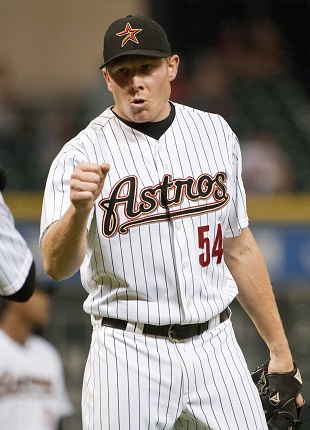
Welcome to the big leagues Jeff Luhnow.  A mere six days into his inaugural tenure as a general manager of a Major League franchise Mr. Luhnow has already completed his first trade.  As a fan I’m stoked.  Sure, it might have cost us a cheap and controlled closer, but who cares when you’re only going to win 55-60 games.  We were able to bring back a shortstop that has a higher ceiling than any of the other options left via free agency, and we brought back a young arm that has the potential to be as good as a number 3 starter.  Sweet.

There was still one part of this trade that left me with my mouth just a bit open and my mind grasping at straws…we didn’t shed any of the large salaries we have trade Carlos, Wandy, or Brett.  As a matter of fact, the exact opposite occurred.  Whatever.  After being strong armed in to joining the American League, showing up to prom stag (RE: the Winter Meetings), and having David Stern defecate all over the Houston Rockets, it is nice to be able to say that something positive is happening in Houston sports.[1]  I can handle the fact that the rebuilding process will test my heart and drive for the team.  I can accept that.  What I would not have been able to handle was a blown move right out of the gate.  So it is nice to finally enjoy a victory as an Astros fan- no matter how small that victory may be.

I will be sad to see Mark Melancon leave, though.  Not because of any stats, or because he made one of my outlandish predictions come true, or because of any way he could possibly help the team between the lines.  Melancon will be just fine as a closer.  As he logs more innings his BB/9 will decrease and finally allow his 8K/9 to let him slam the door shut.[2]   No, this break-up is of a more personal shade.  Before Marky Mark was chuckin’ in The Show, he and I were teammates in Tucson.  We were both on the 2004 University of Arizona team that went to the CWS that year.  You can only imagine my excitement when he came to Houston as part of the deal that sent Berkman to the Yankees.  It was pretty cool to have a friend playing for your favorite team.  It was a unique lens from which to view.  But that is neither here nor there.  Honestly, I just wanted to share a quick story about Mark and myself from that 2004 trip to Omaha.  It goes like this…

It was the night after our first game of the tournament- a loss to Georgia- and Mark and I were back at the hotel.  Because I was medical redshirting and not playing I was obviously itching to go out and enjoy the local taverns and watering holes.  Mark tells me that he has some friends from high school in town and I should hang out with them.  One house party, and many sodas later, I find myself back at the hotel approximately 3:30 A.M.  Not quite sure which room was mine I began trying them all.  Then called my girlfriend at the time to find out why she wouldn’t open the door to her apartment.  She immediately realized how lost I was and called Mark, begged relentlessly, and convinced him to find me.  He finds me on the floor below and politely walks me back to the room.  Then Beelzebub reared his true colors.  His eyes locked with mine and I felt his tug on my soul as he yelled something at me about how, “…and If I blow a f—–g save tomorrow I’m going to f—–g kill you!”  Sure enough, the next day Mark, the true freshman, was out there in a win-or-go-home game at the College World Series.  And true to form Marky Mark shoved and made sure we saw another game that season.  It was tits.  Mark, if you ever read this, big ups man.  You deserve everything that comes your way.


[1] No, the Texans don’t count for me.  I grew up an Oilers fan and moved out of Houston before the Texans were a team.

[2] Don’t believe me?  Look at the splits for him pre and post All-Star break.  Match that trend with the fact that he is finally throwing his new cutter with much better control and I think you will agree with me.

Shilo McCall Commits to Arkansas

Perhaps the most accomplished position player in the history of San Juan County, Piedra Vista HS and Strike Zone Cardinal CF, Shilo McCall, has verbally committed to Arkansas.  McCall is an excellent student with elite tools across the board.  At 6-foot-1 and 210-pounds, and just 17 years of age, Shilo is one of the more imposing players on any diamond he plays.  His mechanics have always been sound as he takes a very direct path to contact with excellent weight transfer.  Everything Shilo does on the offensive side of the ball is exceptional as he also has run 60’s in the 6.5 to 6.6 range.

Shilo still has room to grow as a player, particularly on the defensive end.  His actions in the outfield are representative of a player who is still somewhat new to an everyday outfield role.  Some have suggested that his tools play better in left, but with obvious speed and the ability to improve in terms of jumps on the ball, there is no reason that Shilo cannot stay in center.  There is also no reason that his arm can’t tick up to a point that he can be an everyday right fielder.

I’ve heard from pretty reliable sources that Shilo has a chance to get inside the top three rounds of the draft, so hopefully he is left with a very difficult choice to make this summer.  Now that he has a career in the SEC as leverage, something tells me that his stock is rising.  Good luck and congratulations!